
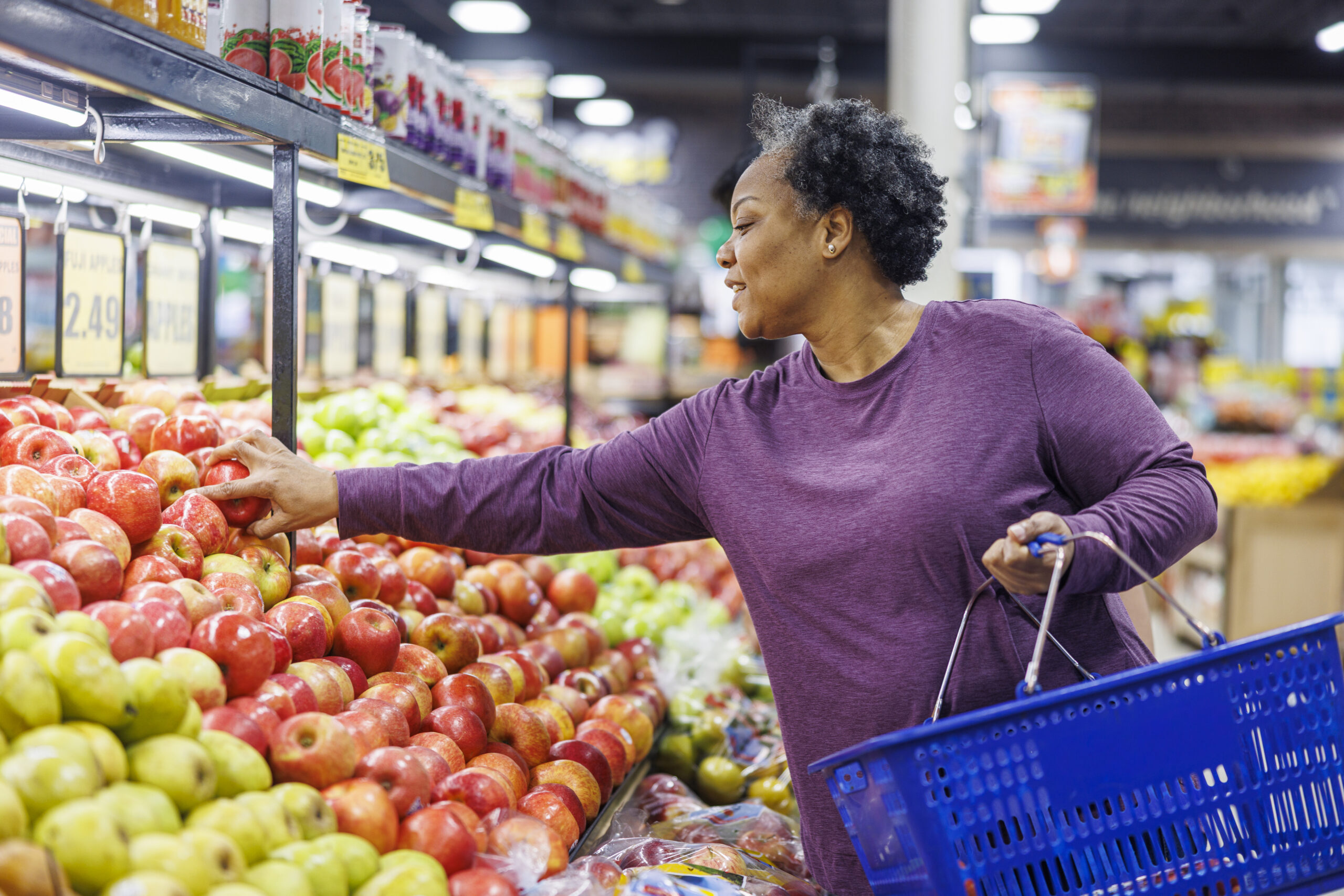
When I started in produce more than 15 years ago, I could answer “Where does this brand show up?” in about 10 seconds. A secondary display if we could get one. A placement in the circular. A sampling program on a Saturday. Maybe in-store radio during peak season.
We were all chasing the same person: the mom with young kids in the produce department on a Tuesday afternoon, deciding what her family would eat that week. She’s still in most of the briefs I see today. What’s changed is how a brand reaches her, and what she’s willing to do once it has.
Branded produce is one of the fastest-growing corners of the store
Every October, I walk the International Fresh Produce Association (IFPA) Global Produce & Floral Show floor and I’m blown away. Packaging that would look at home in the beauty aisle. New varieties bred for flavor and vibrant color. Convenience products that solve cooking dilemmas. There’s innovation at every turn.
The data backs this up. Packaged produce grew from 53% of produce sales in 2018 to 62% in 2023, according to Circana figures cited by Anne-Marie Roerink of 210 Analytics. While packaging is not necessarily branding, it is a precondition for it. You can’t put a name on something sold loose.
And shoppers are responding, younger ones especially. The Packer’s Fresh Trends 2026 survey found that 41% of Gen Z and 39% of millennials had bought Cotton Candy grapes in the past year, compared with just 19% of baby boomers. That’s a grape with a brand name and a flavor promise, and two in five young shoppers have tried it.
You can see the same shift across the department. Apples are a clear case. For decades the choice was Red Delicious, Granny Smith or whatever the store happened to have. Now Cosmic Crisp, Envy, SugarBee and Pink Lady are managed brands with real marketing behind them, and Cosmic Crisp has gone from a Washington State University breeding project to the No. 3 apple variety in the country by both dollars and volume, per Circana. Bolthouse took the carrot, a generic vegetable, and built a brand people recognize. Driscoll’s launched Sweetest Batch in 2019 as a premium brand priced above standard berries, and shoppers pay it.
Each of those brands took something people bought without thinking and gave them a reason to think about it. Most of the category still hasn’t.
The gap between the show floor and the cart
Here’s the part that should give us pause.
Provoke Insights surveyed 1,500 Americans this past summer and asked about produce brands. Only 21% said they often or always notice the brand or grower name on fresh produce. And 26% said it factors into what they buy.
IFPA’s “State of the U.S. Produce Consumer 2026” research points the same way. When it asked what drives where people shop for produce, the answers were freshness and good value, both at 77%, followed by quality (75%), selection (73%) and discounts and promotions (58%). Every factor on that list is about the product or the price. Not one is about whose name is on it.
Put that next to what I see every October and you get the honest state of the category. The packaging is beautiful. The varieties are better than they have ever been. And for most shoppers, none of it is the reason to choose one product over another. They are still buying produce the way they always have: whatever looks freshest at a price that feels fair.
There are two ways to read that. One is that branding doesn’t really work in produce, that it’s a commodity at heart and shoppers are never going to care whose name is on the bag. The other is that a handful of companies have proven it works and the rest haven’t given shoppers enough to go on.
Cotton Candy grapes, Cosmic Crisp apples and Sweetest Batch berries make the case for the second reading. The opportunity isn’t that branding might work in produce. It’s that it clearly does, and most of the category hasn’t tried.